Postpartum
Hormonal changes can move more hairs into a resting phase after birth.

Women's hair loss
A widening part, postpartum shedding, breakage, traction and sudden patches are different stories. Start by separating what you see, when it began and how your scalp feels.
The trigger can happen months before the shedding becomes visible.
Life stage matters
Hormonal changes can move more hairs into a resting phase after birth.
Age, medications, thyroid disease and iron status can overlap.
Tension, bleach, heat and friction can affect fibers and edges.
Scarring, sudden patches or a painful scalp should pause the box route.
Concern guide

Female pattern hair loss often appears as gradual thinning over the top and a widening part while the frontal hairline may remain relatively preserved.
Concern 01
A noticeable increase in shed hairs can follow illness, major stress, childbirth, weight change or medication changes. Timing and trigger history are important.
Concern 02
Bleach, heat, friction, tension and dryness can break strands. Breakage needs fiber protection, not a claim that a topical product regrows a follicle.
Concern 03
The words are often used interchangeably, but the difference changes what questions and care make sense.
SheddingFull-length strands release from the follicle
BreakageFibers snap along the length
Pattern lossFollicles produce finer hairs over time
TractionRepeated tension can affect edges and density
Sudden patchesPause the box for outside medical assessment
Separate the clue before choosing the care.SheddingFull-length strands release from the follicle
BreakageFibers snap along the length
Pattern lossFollicles produce finer hairs over time
TractionRepeated tension can affect edges and density
Sudden patchesPause the box for outside medical assessment
Separate the clue before choosing the care.

Interactive concern explorer
Widening part
Female pattern hair loss often appears as gradual thinning over the top and a widening part while the frontal hairline may remain relatively preserved.
Education, not diagnosisIllustrative journey
Standardized progress review
Use the same part placement, light, wash timing and styling so the baseline is genuinely comparable.
Use the same part placement, light, wash timing and styling so the baseline is genuinely comparable.
Generated simulation, not a customer result. Response depends on the cause, treatment, consistency and individual biology; some forms of hair loss do not regrow.
Progress photography is most useful when the presentation stays consistent. These generated phases demonstrate a review method, not a customer result or a guaranteed outcome.
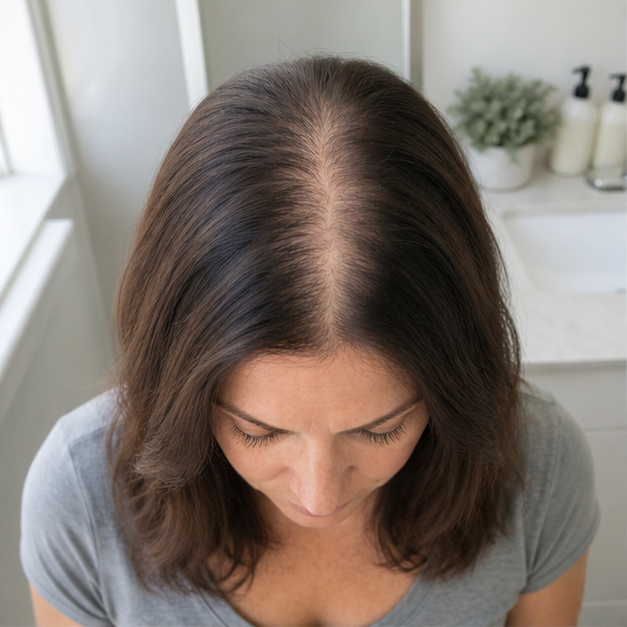
Record the visible pattern before changing the routine.
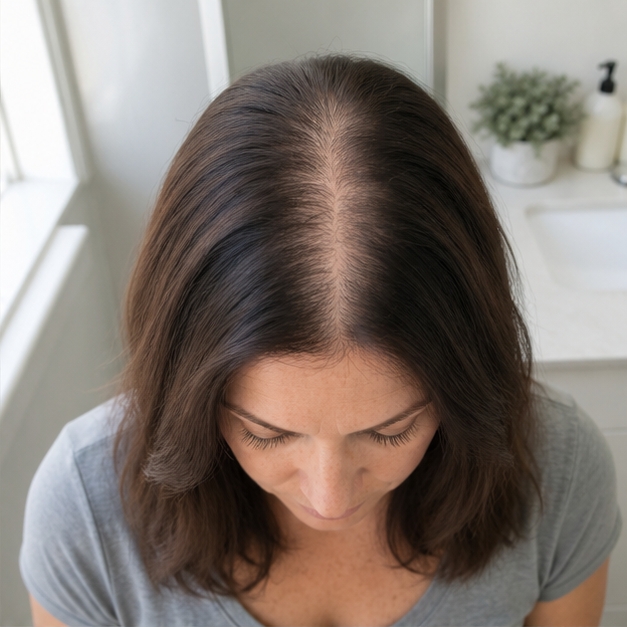
An early checkpoint is useful for routine fit, not a result deadline.
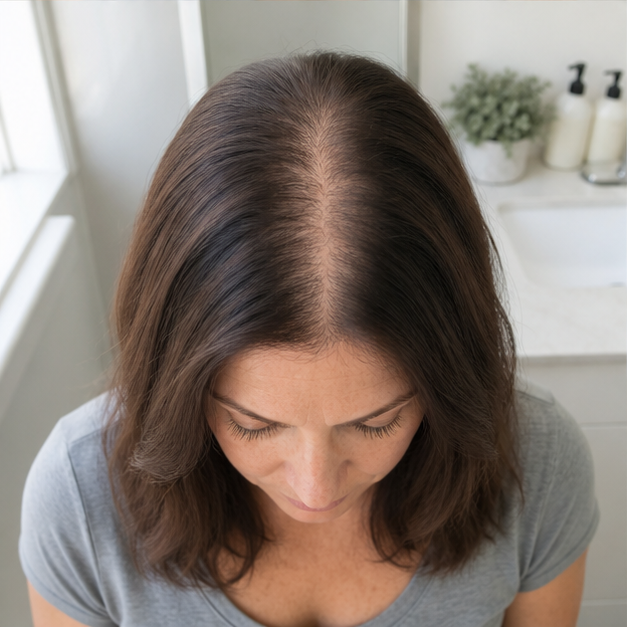
Use the same angle, part, hair length, wash timing and light.
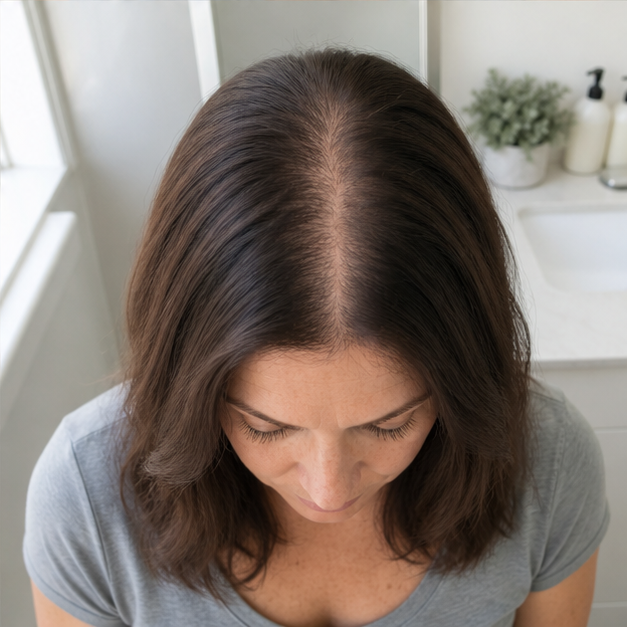
Review direction, tolerance and whether an Inruut practitioner should pause or adjust the route.
Generated educational sequence. Individual response depends on the cause, treatment, consistency and biology. Some forms of hair loss do not regrow.
Birth, illness, surgery, major stress and weight change can shift the cycle months before shedding becomes noticeable.
Explore the science
Gentle cleansing, conditioner and a weekly mask can support slip and reduce snapping; a scalp step belongs only when it fits.
Explore the scienceHair needs nutrients. That does not mean everyone needs a supplement.
Visible loss does not prove a deficiency. An Inruut practitioner should avoid guessing and recommend outside licensed care when history and symptoms suggest testing may be useful.

Do not cover these signs with a generic growth bundle. They sit outside the Inruut wellness profile and should be assessed by an appropriate licensed medical professional.
Review care guidance
The profile organizes concern, timing, scalp, routine and goal before showing an illustrative route.
Take the hair quiz